The moment your child is born, you begin waiting for their first word. You listen carefully to every coo, babble, and giggle, hoping each new sound is the beginning of language. When other children start talking, and yours doesn’t, worry can creep in quickly.
If you are a parent currently experiencing this, you are not alone, and you are not doing anything wrong. Speech delays affect many children, and speech delay books for parents can become powerful tools to guide you through this journey. These books offer more than just information about child development—they provide hope, perspective, and a reminder that patience truly matters.
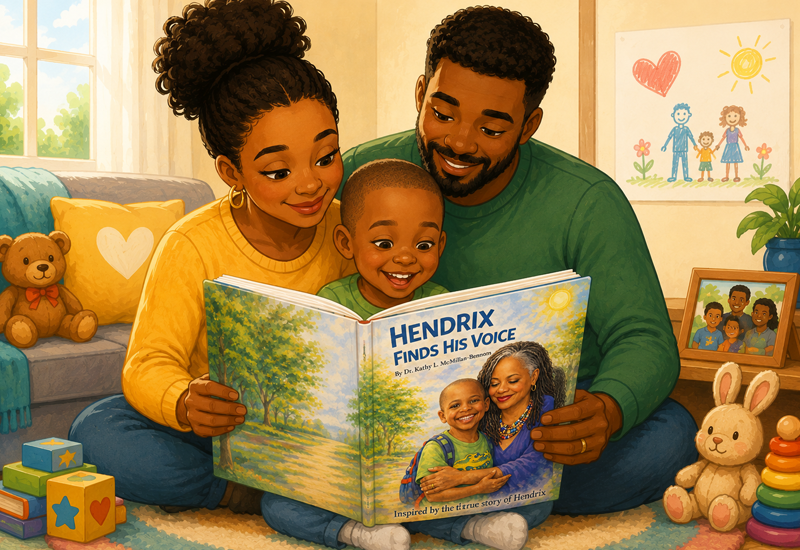
One such book, Hendrix Finds His Voice by Dr. Kathy L. McMillan-Bennon, shares a real-life story of a boy who discovered his voice in his own time. It teaches parents that progress may be slow, but love and consistency make all the difference.
This blog will explore what speech delays actually mean, when to seek help, and why staying calm helps your child thrive. More importantly, we will look at what the best speech delay books can teach about patience—and why trusting the process is one of the most loving things you can do.
What Is Speech Delay in Young Children?
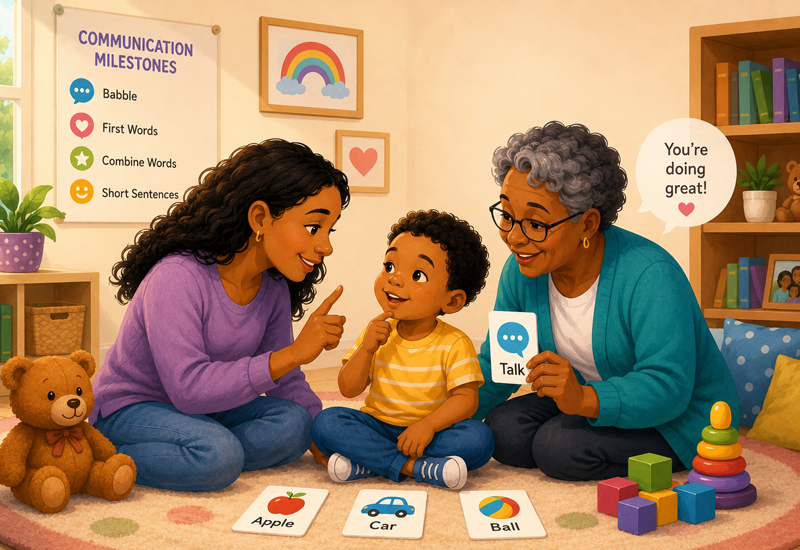
Speech delay occurs when a child does not develop spoken language skills at the expected age. While every child develops differently, there are general milestones that most children reach within certain timeframes. When these milestones are delayed, early intervention can be helpful.
Understanding the difference between a true delay and a child simply developing at their own pace is important. Speech delay books for parents often help clarify this distinction, offering reassurance that each child’s communication journey is unique.
Common Signs of Speech Delay
Parents should be aware of signs that may indicate a speech delay. These can include:
- Limited babbling or cooing during infancy
- Not responding to sounds, voices, or their name
- Using gestures instead of words to communicate
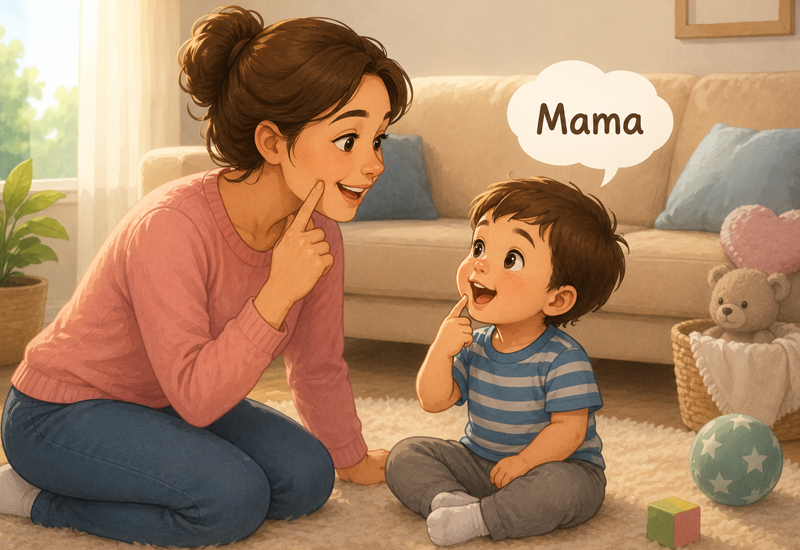
- Difficulty imitating sounds
- A smaller vocabulary than other children their age
- Struggling to combine words into sentences
It is important to remember that showing one or two of these signs does not always mean a child has a speech delay. Every child grows differently, and a book about speech delay for parents can help you better understand what to look for—and what not to worry about.
When Parents Should Seek Professional Support
While patience is key, seeking professional support when concerned is also important. Pediatricians, speech-language pathologists, and early intervention specialists can assess your child’s development and provide guidance.
A book about helping children with speech delay will often explain the benefits of early evaluation. The earlier a delay is identified, the sooner strategies can be put in place. This does not mean something is wrong—it simply means your child receives extra support to help them communicate confidently.
Books like Hendrix Finds His Voice show how professional therapists can work alongside families to help children grow at their own pace.
Book About Speech Delay That Inspires Hope
Hendrix Finds His Voice by Dr. Kathy L. McMillan-Bennon is a heartwarming story that has become one of the most meaningful speech delay books for parents available.
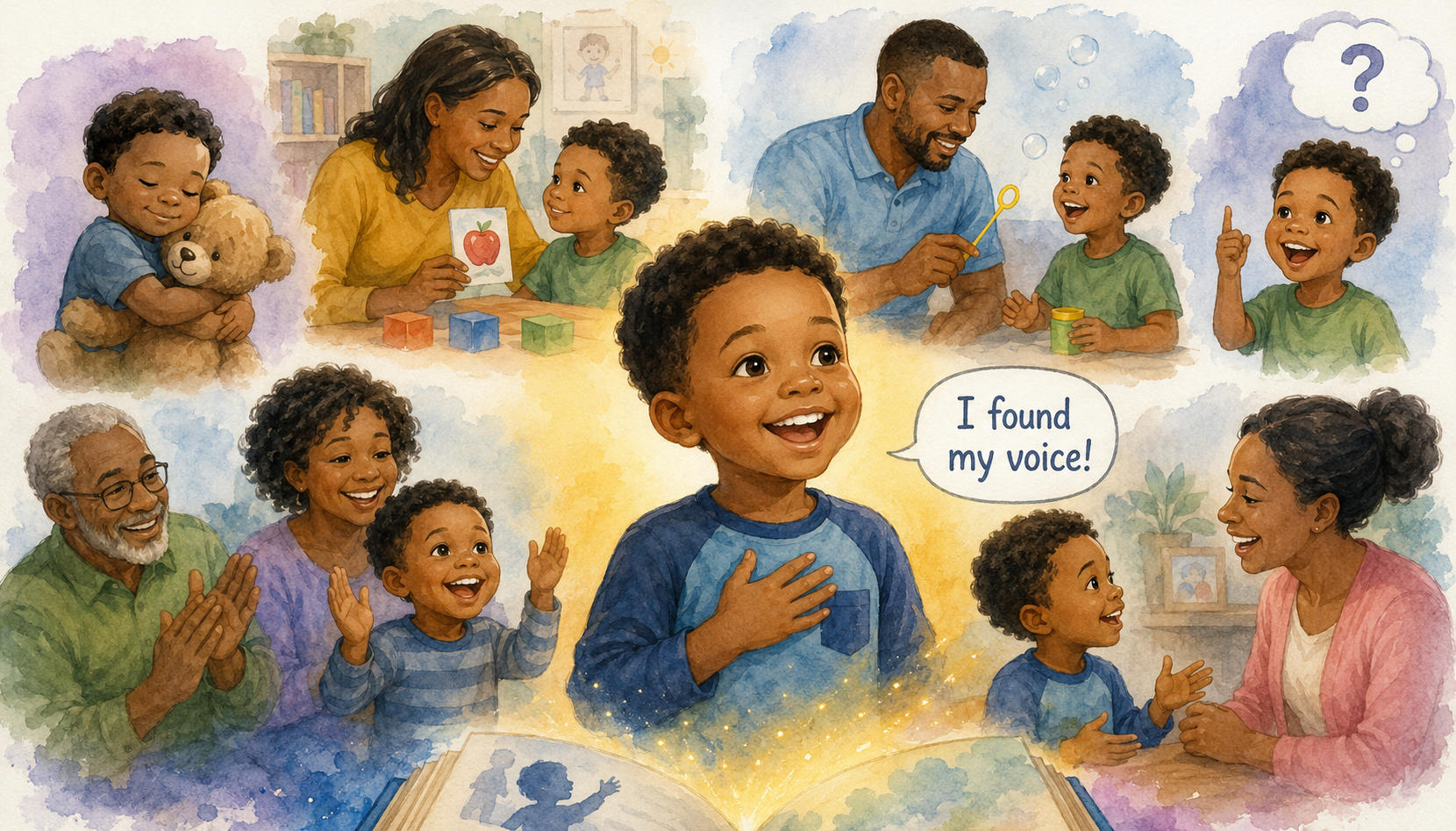
The book follows Hendrix, a joyful little boy who loves spending time with his family. While other children begin babbling and cooing, Hendrix continues smiling, hugging, and kissing—but he does not make sounds. His family grows concerned, and medical visits confirm he is healthy but needs extra help.
With love from his MiMi, Mommy, Grandpa, and aunts, and support from speech therapists, Hendrix practices sounds and plays learning games. Progress is slow, but the family never stops believing. Eventually, after months of practice, Hendrix begins speaking in complete sentences—and he discovers the power of his voice.
This is not just a story about speech development. It is a story about patience, resilience, and family support. For any parent searching for a book about speech delay that offers genuine hope, this book delivers. As Dr. Kathy L. McMillan-Bennon writes in her note to parents: “Every child grows and learns in their own time, each on a unique and meaningful journey.”
Is Your Child Not Talking Yet? Here’s What Parents Should Know
If your child is not talking yet, you may feel anxious. That is natural. But speech delay books consistently emphasize the importance of staying calm and informed.
Every Child Reaches Speech Milestones at a Different Pace
Child development is not a race. Some children begin talking early, while others may not speak until they are three or four. Both paths can be perfectly normal.
Hendrix Finds His Voice illustrates this beautifully. Hendrix did not speak until he was five years old. Yet with love, therapy, and support, he found his voice and now speaks confidently.
The best speech delay books remind us that every child develops on their own timeline. Comparing your child to others can cause unnecessary stress. Instead, celebrate small victories and trust the process.
When Late Talking Is Not Always a Cause for Panic
Late talking does not always mean there is a serious problem. Many children who start talking later catch up quickly once they begin. Others may need additional support, but with early intervention, they thrive.
A top book for new parents of late talkers children helps distinguish between normal variations and situations requiring professional attention. These books offer guidance without creating unnecessary fear.
Dr. Kathy L. McMillan-Bennon’s story makes this clear. Hendrix’s family noticed he was not talking, but they did not panic. They sought help, stayed patient, and celebrated every new word.
Knowing the Difference Between Speech Delay and Normal Development
Understanding the difference between a speech delay and a child simply developing at their own pace is important. A true speech delay means a child is significantly behind developmental milestones. Normal development means a child is progressing, even if more slowly than peers.
Speech delay books can help you identify which category your child falls into. They also provide strategies for supporting your child at home, regardless of their developmental stage.
Why Parents Should Stay Calm During a Child’s Speech Journey
Staying calm when your child is not talking can be challenging. But parental anxiety can actually affect a child’s communication development. Children sense stress and may withdraw when they feel pressured.
The best book for parents of children with speech delay emphasizes that patience is not passive—it is active. Staying calm means showing up consistently, speaking to your child gently, and celebrating even the smallest attempts at communication.
In Hendrix Finds His Voice, MiMi never loses hope. She sings softly to Hendrix, reads with him, and reminds him he is loved. This calm, steady presence creates a safe environment for learning and growth.
Calm parents also model emotional regulation. When children see their parents staying patient, they feel safe to explore new skills—including talking.
How Daily Support Can Improve Early Communication Skills
Professional therapy is valuable, but daily support at home matters just as much. Speech delay books for parents often include practical strategies for encouraging communication at home. Here are some tips commonly recommended by experts and found in books like Hendrix Finds His Voice:
- Talk, read, and sing together daily—Exposure to language helps children learn
- Celebrate every small victory—A new sound or word deserves recognition
- Create consistent routines—Predictability helps children feel secure
- Encourage play and curiosity—Play-based learning is effective
- Trust your instincts—Parents know their children best
Dr. Kathy L. McMillan-Bennon includes a “Note to Parents” section that reinforces these strategies. She reminds parents to celebrate small steps and honor each moment of progress.
Daily support does not require fancy tools or expensive programs. It requires love, patience, and consistency—all of which you already have.
Why Hendrix Finds His Voice Is a Meaningful Book for Families
If you are searching for speech delay books, Hendrix Finds His Voice stands out for several reasons.
1. Real-Life Inspiration
The story is inspired by Dr. Kathy L. McMillan-Bennon’s real-life grandson, Hendrix. This authenticity gives the book emotional depth and credibility. Readers know the journey is real, which makes the message more powerful.
2. Family-Centered Approach
The story emphasizes the role of the extended family. Hendrix is supported not just by his mother, but by his grandparents and aunts. This reflects the reality that raising a child takes a village—especially when challenges arise.
3. Professional Credibility
Dr. Kathy L. McMillan-Bennon is an educator, literacy coach, and mentor with decades of experience. Her professional background ensures that the book is developmentally sound. Yet her grandmother’s heart ensures the book is warm and loving.
4. Empowering Message
The book celebrates finding your voice—not just in terms of speech, but in terms of confidence and self-expression. Hendrix learns that his voice matters and that the world is listening.
For parents looking for a top book about speech therapy, this story offers both practical insight and emotional encouragement.
Don’t Panic—Your Child’s Voice May Simply Need More Time
If your child is not talking yet, take a deep breath. Your child is still the same wonderful person they have always been. A speech delay does not define them, and it does not define you as a parent.
Speech delay books for parents, like Hendrix Finds His Voice, remind us that children grow in their own time. Progress may feel slow, but love, patience, and consistent support make all the difference.
Hendrix did not speak until he was five. But when he did, he spoke in complete sentences. He began asking questions, sharing thoughts, and telling everyone what he needed. Today, he is a big boy with a strong voice and a bright future.
Your child’s story may be similar. Or it may be different. But the message remains the same: don’t panic. Trust your child. Trust the process. And trust that your love is the most important support they will ever receive.
Final Thoughts
Parenting a child with a speech delay can feel lonely and overwhelming. But you are not alone. Millions of parents have walked this path before you, and many have found comfort and guidance in speech delay books for parents.
Hendrix Finds His Voice by Dr. Kathy L. McMillan-Bennon is one such book—a heartfelt story that teaches patience, celebrates progress, and inspires hope. It is a book about helping children with speech delay that offers both practical wisdom and emotional reassurance. As Dr. Kathy L. McMillan-Bennon writes: “Celebrate the small steps and honor each moment of progress.”
That is the heart of it. Progress may not always be fast, but it is always meaningful. And with your love and patience, your child will find their voice—in their own time.
Frequently Asked Questions About Speech Delay
What is a speech delay, and how do I know if my child has one?
A speech delay means a child isn’t developing spoken language at the expected ages. Signs include limited babbling, not responding to name, or using gestures instead of words. Speech delay books like Hendrix Finds His Voice help distinguish normal variation from true delay. Consult your pediatrician if concerned.
Is it normal for a child to start talking late?
Yes, many children start talking later and catch up quickly. Each child develops uniquely. Hendrix Finds His Voice shares a real story of a boy speaking at age five who now communicates confidently. A book about speech delay for parents reassures that different timelines are perfectly normal.
Can reading books really help my child with a speech delay?
Yes, reading daily builds vocabulary, models pronunciation, and creates bonding that encourages communication. Speech delay books offer strategies to make reading interactive. In Hendrix Finds His Voice, family reading time supports Hendrix’s language development in a loving, low-pressure way.