Becoming a parent for the first time is one of life’s most profound and transformative experiences. It is a journey filled with wonder, joy, sleepless nights, and countless questions. Among the most common concerns that weigh on new parents’ hearts is whether their child is developing “on track.” When other children begin babbling and forming words while your own child remains quiet, the worry can become overwhelming. This is exactly the experience that inspired Dr. Kathy L. McMillan-Bennon to write Hendrix Finds His Voice—a tender, beautifully illustrated children’s book that has become an essential resource for first-time parents navigating the uncertain waters of early childhood development.
This comprehensive blog will explore why children books for first time parents are invaluable tools for understanding developmental differences, building patience, and finding hope in the midst of uncertainty. We will look into the inspiring true story behind Dr. Kathy L. McMillan-Bennon’s book, examine the developmental journey of late-talking children, and provide practical guidance for parents who may be wondering if their child’s path to speech is simply taking a little longer.
A Heartwarming Children Books for First Time Parents Facing New Challenges
Why First-Time Parents Need Stories of Hope
First-time parents face unfamiliar territory where developmental milestones spark anxiety. When speech doesn’t follow expected timelines, worry can feel overwhelming. Children books for first time parents, like Hendrix Finds His Voice, offer comfort through relatable narratives, transforming clinical concerns into heartfelt connection while reminding parents their fears are valid and hope is justified. This is why children books for first time parents are so essential.
What Makes This Book Special for New Parents?
Unlike typical children’s books, this one is rooted in the author’s real experience with her grandson’s speech delay. This authenticity resonates deeply with worried parents, reassuring them their isolation is understood. The story validates each child’s unique developmental journey while normalizing the process of seeking professional support.
The Inspiring Journey of Hendrix Finding His Voice
1. A Story Rooted in Love and Family
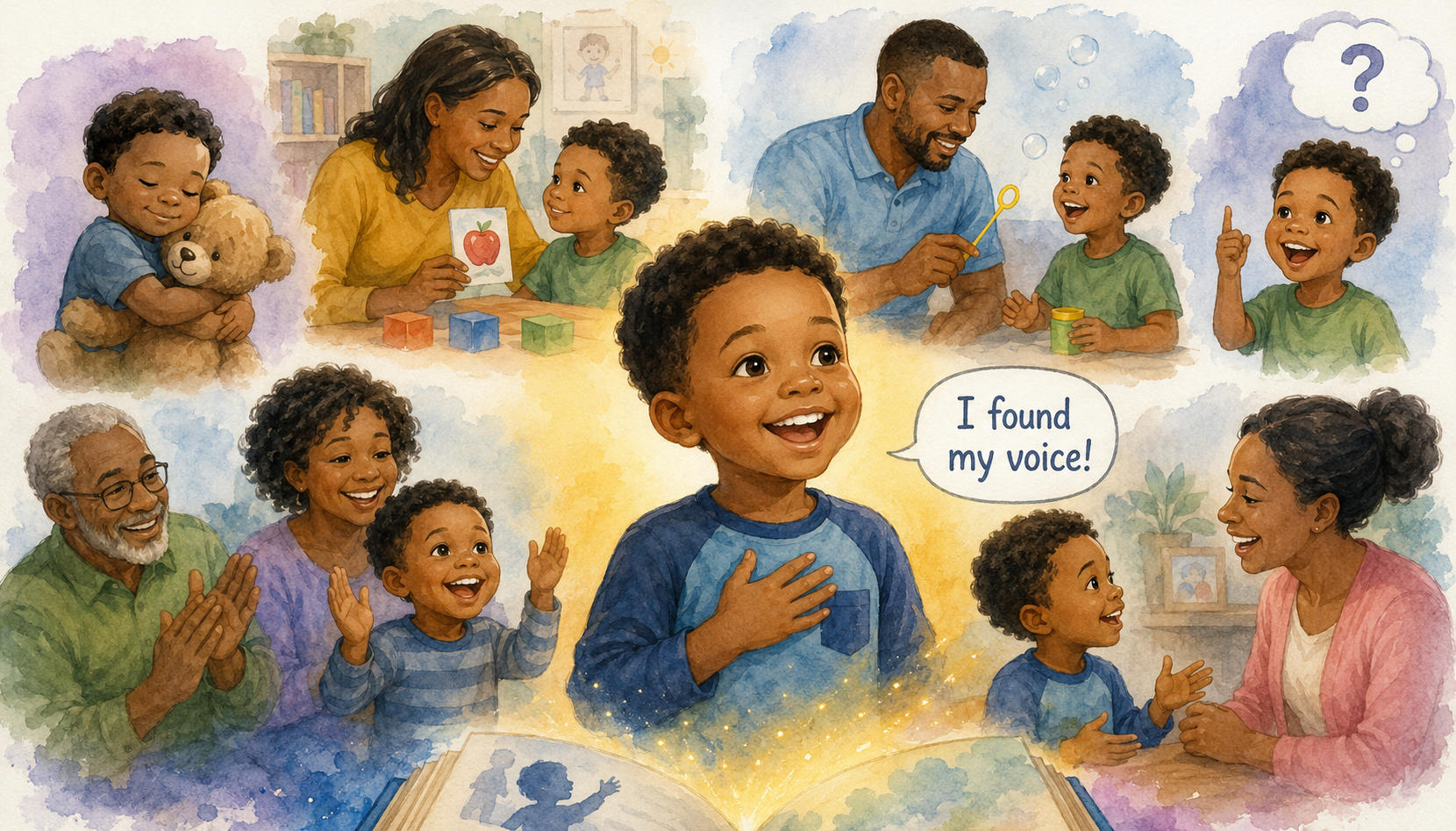
The book opens with Hendrix as a joyful child cherished by his family. It establishes his worth as unrelated to speech—he is loved for his hugs and smile. This reminds parents that children deserve unconditional love and celebration, regardless of developmental milestones or progress.
2. The Growing Concern
The story honestly captures the moment family members begin wondering why Hendrix isn’t speaking. Dr. Kathy L. McMillan-Bennon acknowledges parental worry without letting it overwhelm the narrative. She balances concern with unwavering love, showing that questions and fears can coexist with deep, unchanging devotion to a child.
3. The Therapeutic Journey
Speech therapy is introduced positively and accessibly, without clinical language. Therapists play learning games at home, helping Hendrix grow stronger. This normalizes seeking professional help as a loving investment rather than a failure, reassuring first-time parents that therapy is a healthy, supportive step toward their child’s development.
4. The Triumphant Moment
The book builds toward Hendrix’s breakthrough—first two words, then sentences. By age five, he speaks in complete sentences, asks questions, and shares thoughts. The powerful conclusion celebrates his voice and courage, reminding readers that with patience and support, every child can find their voice.
Understanding Late Talking Children and Their Unique Development Journey
What Does “Late Talking” Mean?
Late talking, also known as speech delay or expressive language delay, refers to children who have typical development in other areas—such as understanding language, social skills, and motor skills—but who are slower than their peers to begin speaking. These children may understand what is said to them, but struggle to produce spoken language themselves.
It is important to note that late talking is not necessarily an indicator of intelligence or future abilities. Many children who speak later than their peers go on to develop perfectly normal language skills and achieve great things. The key is early intervention and supportive patient care.
The Range of Normal Development
Dr. Kathy L. McMillan-Bennon’s book reminds parents that “children develop at their own pace.” This simple statement carries profound wisdom. In a culture that often emphasizes milestones and timetables, it can be easy to forget that human development is not a race. Some children begin talking early, some take more time, and both paths can be perfectly normal.
The “Note to Parents” section in the book reinforces this message with gentle authority: “Every child grows and learns in their own time, each on a unique and meaningful journey. If your child is taking a different path, please know that it is not only okay, it is part of their individual growth story.”
When to Seek Professional Help
While patience is important, the book also demonstrates the value of taking action. Hendrix’s family consults doctors and therapists, leading to appropriate support that helps him find his voice. This balance—between patience and proactive care—is a crucial lesson for first-time parents. The American Speech-Language-Hearing Association (ASHA) recommends that parents seek evaluation if:
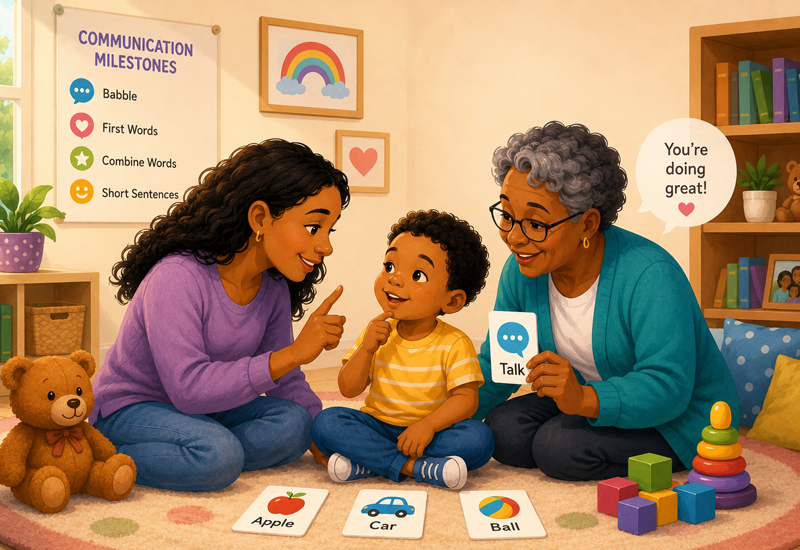
- A child is not babbling by 12 months
- A child has not said their first word by 15 months
- A child has not used two-word phrases by 24 months
- A child shows regression in language skills at any age
Hendrix’s story aligns with these recommendations while emphasizing that seeking help is a loving choice, not a failure.
How Love and Family Support Help Children Build Confidence
The Role of Family in Language Development
Hendrix Finds His Voice beautifully illustrates how family support contributes to a child’s development. Every family member plays their part:
- MiMireads stories, sings, and provides constant reassurance
- Mommy“smiles, claps, and cheers for every little sound he makes”
- Grandpareminds Hendrix “that he is strong, smart, and full of wonderful possibilities”
- Aunt Tee Teeshares the joy of reading and imagination
- Aunt La Labrings playfulness and laughter to Hendrix’s days
This collective support creates what child development experts call a “language-rich environment”—a setting where words, sounds, stories, and encouragement surround children. Research consistently shows that children in such environments develop language skills more readily, even if they start later than their peers.
The Power of Encouragement
One of the most touching moments in the book describes Mommy’s response to Hendrix’s efforts: “With Mommy beside him, Hendrix feels brave enough to keep trying.”
This single sentence captures a profound truth about child development: children need to feel safe and supported to take risks. For a child struggling with speech, every attempt to make a sound is an act of courage. When parents and caregivers respond with warmth, celebration, and patience, they build the emotional safety children need to keep trying.
Singing as a Tool for Connection
The book describes MiMi singing “You Are My Sunshine” to Hendrix. This detail is not merely sentimental—it reflects research showing that music and singing can support language development. Songs provide:
- Rhythm that helps children anticipate sounds and words
- Repetition that reinforces vocabulary
- An emotional connection that makes learning joyful
- Slower, clearer pronunciation than typical speech
For first-time parents, the book’s inclusion of this detail is a gentle reminder that simple, everyday activities—like singing to your child—can be powerful tools for supporting speech and emotional connection.
The Role of Patience in a Child’s Speech and Emotional Growth
Why Patience Matters
Patience is perhaps the most challenging virtue for first-time parents to cultivate, especially when they are worried about their child’s development. Hendrix Finds His Voice honors this struggle while gently guiding parents toward patience.
The book describes progress that “sometimes felt slow,” but notes that “love and patience filled their hearts.” This acknowledgment that progress can feel frustratingly slow is validating for parents. It says, “We know this is hard. We know you want answers. But love and patience will carry you through.”
The Emotional Toll on Parents
First-time parents may not expect the emotional weight that comes with developmental concerns. Questions like “Did I do something wrong?” “Is my child in pain?” “Will they be okay?” can create significant anxiety.
It addresses these concerns indirectly through its warm, reassuring tone. By showing Hendrix’s family as loving, capable, and ultimately successful, the book offers a template for parents: you can worry and still be a wonderful parent. You can seek answers and still trust your child’s unique journey.
Patience as a Gift to Children
For children, a parent’s patience is a gift that extends far beyond language development. When children feel that they can take their time, make mistakes, and grow at their own pace without judgment or pressure, they develop:
- Higher self-esteem
- Greater willingness to try new things
- More secure attachments to caregivers
- Reduced anxiety about performance and achievement
These benefits last a lifetime. By modeling patience, parents teach their children self-compassion—a skill that will serve them well in every area of life.
Supporting Early Childhood Development Through Stories and Encouragement
The Power of Reading Aloud
Dr. Kathy L. McMillan-Bennon, herself an educator and literacy advocate, understands the profound impact of reading to children. The book shows family members reading with Hendrix, emphasizing that literacy and language go hand in hand. Reading aloud to children, even before they can speak, offers numerous benefits:
- Exposure to vocabulary beyond everyday conversation
- Understanding of sentence structure and grammar
- Development of listening and attention skills
- Strengthening of the parent-child bond
- Introduction to story structure and narrative thinking
For children books for first time parents, this message is particularly important. Many first-time parents understand that reading is important, but may not know why or how to do it effectively.
Encouragement as a Daily Practice
The book offers specific examples of encouragement that parents can incorporate into their daily lives:
- Celebrating “every little sound”
- Cheering and clapping for efforts, not just achievements
- Using positive language like “strong,” “smart,” and “full of wonderful possibilities”
- Creating routines that build confidence
These practices are not complicated or expensive. They simply require intention and consistency.
Play as Language Learning
The therapists in the story “played learning games” with Hendrix, reinforcing that play is a powerful vehicle for development. Through play, children:
- Practice social communication
- Learn to take turns (a foundational conversation skill)
- Experiment with sounds and words in low-pressure settings
- Make connections between words and actions
For parents worried about speech delays, read our blog for full guidance here: “Children’s Book about Speech Delay: A Parent’s Guide to Supporting Early Communication Skills.”
Common Mistakes First-Time Parents Make When Their Child Starts Speaking Late
1. Comparing Their Child to Others
Parents often compare their child’s development to siblings or peers, creating unnecessary anxiety while overlooking their child’s unique strengths. Instead, as Dr. Kathy L. McMillan-Bennon reminds us, every child develops in their own time. Celebrate individual progress by keeping a journal of new sounds and words to remind yourself how far your child has come.
2. Overlooking Non-Verbal Communication
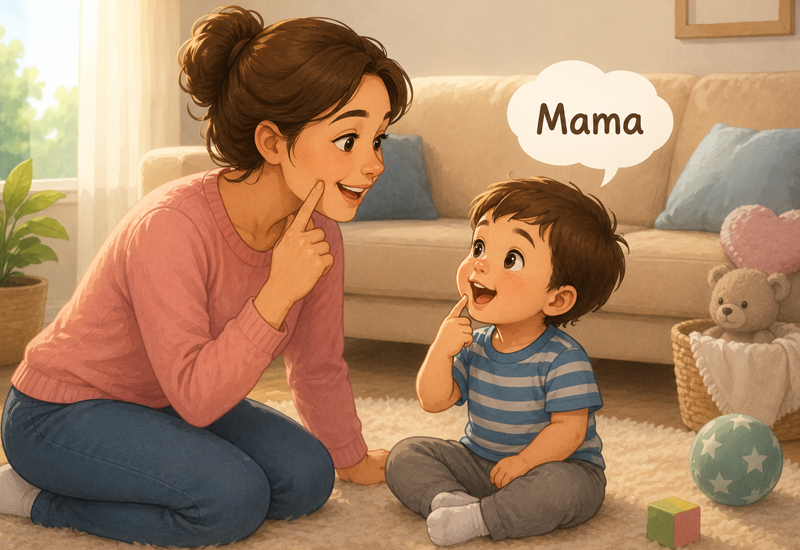
First-time parents often focus so heavily on spoken words that they miss pointing, gestures, and eye contact—vital foundations of language development. Pay attention to and acknowledge these communications. When your child points, name the object. Respond warmly to eye contact. These interactions build the essential groundwork for future spoken language.
3. Failing to Create a Language-Rich Environment
Some parents, worried about confusing their child, inadvertently reduce the language their child hears, which can slow development. Instead, talk constantly—narrate your day, describe activities, name objects, and ask questions. Even without verbal responses, your child is absorbing language and building vocabulary through consistent exposure.
4. Pressuring the Child to Speak
Anxious parents may unintentionally pressure children with repeated questions or demands, creating anxiety and resistance. Instead, create pressure-free language opportunities by offering choices, singing songs, and reading books. Celebrate every communication attempt without demanding perfection, which encourages confidence and reduces speaking anxiety.
5. Delaying Professional Help
Some parents wait, hoping their child will “grow out of” a speech delay, missing the crucial window for early intervention. Trust your instincts—if concerned, seek professional evaluation. As Hendrix Finds His Voice shows, therapy is a positive, loving step toward helping your child thrive and succeed.
6. Neglecting Their Own Emotional Needs
Parenting a child with developmental concerns is emotionally demanding, and many parents pour all their energy into their child while neglecting their own well-being, leading to burnout. Acknowledge that this journey is hard. Talk to your partner, join a support group, or seek counseling. Caring for yourself is essential to caring for your child well.
Why Children Books for First Time Parents Matter
1. A Bridge Between Concern and Hope
It serves as a gentle bridge for parents navigating the emotional landscape of developmental concerns. The book doesn’t dismiss parental worry; it acknowledges and validates it. But it also points toward hope, demonstrating that with love, patience, and appropriate support, children can find their own unique voices.
2. Representation Matters
As a story about a Black family—including a grandmother, aunts, and a supportive extended family—this book provides representation that is still too rare in children’s literature. For first-time parents from similar backgrounds, seeing their own experiences reflected in a positive, affirming story is powerful.
3. A Tool for Building a Child’s Self-Concept
Reading this book with a child can help that child understand their own journey. A child experiencing a speech delay may feel frustrated, isolated, or “different.” Seeing a character like Hendrix—a joyful, loved child who eventually finds his voice—can build self-worth and resilience.
4. Guidance Without Being Prescriptive
The book offers developmental guidance without feeling prescriptive or clinical. The “Note to Parents” section provides practical tips, but the heart of the book is the story—a story that parents can internalize and carry with them during difficult moments.
5. The Power of the Parent-Child Bond
At its core, it is a love story—a story of how a family’s love and support helped one child find his voice. For first-time parents, this reminder that your love is the most powerful force in your child’s development is essential.
Practical Tips for Parents of Late-Talking Children
What You Can Do at Home
Read Together Daily:
As Dr. Kathy L. McMillan-Bennon’s book shows, reading is central to language development. Make it a cherished daily routine.
1. Use Simple, Repetitive Language:
Use short sentences and repeat key words. Hendrix Finds His Voice itself uses repetition effectively, which children find comforting and instructive.
2. Sign Language and Gestures:
Some parents find that teaching simple signs (like “more,” “eat,” or “all done”) helps children communicate while they develop spoken language.
3. Narrate Your Day:
“I’m cutting an apple. See the red apple? We’re going to eat it for a snack.” This constant exposure to language builds vocabulary.
4. Sing Songs and Say Nursery Rhymes:
The rhythm and repetition of songs support language development and are naturally engaging for young children.
5. Limit Screen Time:
While some educational shows can be beneficial, real human interaction is the most powerful language teacher.
6. Play Turn-Taking Games:
Simple games like rolling a ball back and forth teach the rhythm of conversation—someone speaks/listens, someone speaks/listens.
When to Seek Professional Support
If you have concerns about your child’s speech development:
1. Talk to Your Pediatrician:
They can provide an initial assessment and refer you to specialists.
2. Seek a Speech-Language Pathologist:
These professionals are experts in communication development and can provide evaluation and therapy.
3. Early Intervention Services:
In the United States, early intervention services are available for children under three; school districts provide similar services for children three and older.
4. Trust Your Instincts:
As the book says, “You know your child best.” If you feel something is not quite right, it’s worth exploring.
For more understanding and hope, see our blog “Don’t Panic, Mama: What Speech Delay Books for Parents Can Teach You About Patience.”
Conclusion
Hendrix Finds His Voice by Dr. Kathy L. McMillan-Bennon is among the best children books for first time parents—it is a beacon of hope, a guide for first-time parents, and a testament to the power of family love and patience. Through one little boy’s journey from silence to speech, it addresses the universal fears and hopes of parents watching their children grow.
For first-time parents facing the uncertainty of a speech delay, this book offers what they need most: reassurance that they are not alone, validation that their concerns are understandable, and hope that their child—like Hendrix—can find their voice in their own time. The book reminds us that every child’s journey is unique, and every milestone, no matter how small, deserves celebration.
In a world that pressures parents and children to meet predetermined benchmarks, it whispers a different message: Your child’s path is their own. Trust it. Support it. Love it into existence. As Dr. Kathy L. McMillan-Bennon writes, “Your love, presence, and support make all the difference.” For first-time parents, this is perhaps the most important message of all.
Frequently Asked Questions About Speech Delays
What is a speech delay?
A speech delay occurs when a child’s spoken language develops more slowly than typical for their age, while other areas like understanding, social skills, and motor skills may develop normally. Many children with speech delays eventually catch up with appropriate support.
At what age should I be concerned if my child isn’t speaking?
Consult a pediatrician if your child isn’t babbling by 12 months, hasn’t said their first word by 15 months, or isn’t using two-word phrases by 24 months. Trust your instincts—if something feels off, seek professional guidance.
What causes speech delays?
Speech delays can result from various factors, including hearing issues, oral-motor problems, developmental differences, or simply variations in individual development. Sometimes, no specific cause is identified, and children still develop speech successfully.
Is Hendrix Finds His Voice based on a real story?
Yes! Dr. Kathy L. McMillan-Bennon wrote this book based on her real-life grandson Hendrix’s journey with a speech delay. The authenticity of this true story makes it especially meaningful for families facing similar challenges.