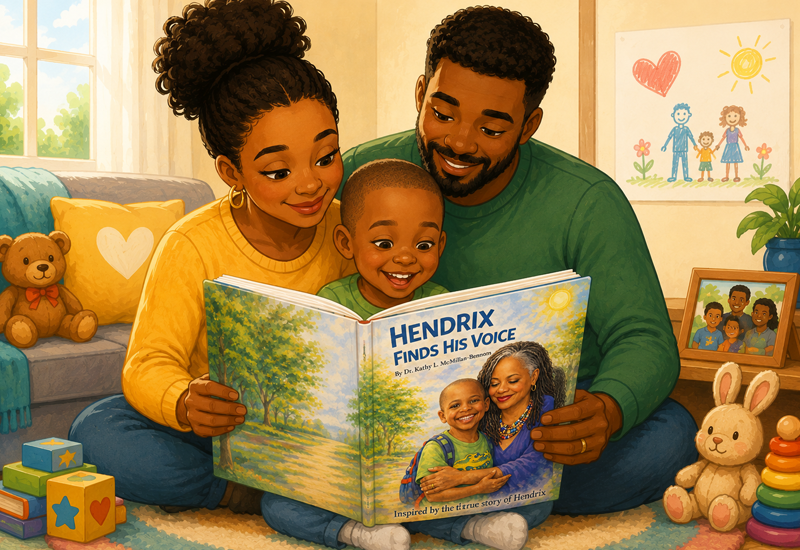
Every family’s journey through childhood is unique. Yet in a world that often measures children against checklists and averages, we all need reminders that growth happens in its own time. Children’s books about child development offer families that reassurance, turning abstract concepts like milestones and developmental timelines into stories that children and caregivers can embrace together. One such story is Hendrix Finds His Voice by Dr. Kathy L. McMillan-Bennon—a tender, true-to-life tale that follows a young boy’s path to finding his voice, surrounded by the love and patience of his family. Through Hendrix’s journey, readers witness how progress unfolds not through pressure, but through presence, encouragement, and trust in a child’s own timeline.
This is the power of a meaningful story—it can shape how we see our children, how we support them, and ultimately, how they learn to see themselves.
Why Stories About Child Development Matter
Child development can feel complicated. Parents wonder if their child is on track, educators work to support different learning styles, and therapists help families navigate various challenges. But at its heart, child development is simply a story of how children grow, learn, and discover who they are.
Children’s books about child development offer a window into this journey. They show families that the path isn’t always straight and that children reach milestones at different paces. They also provide comfort—the reminder that a child’s unique timeline is part of their individual growth story.
Books like these help children see themselves represented. For a child who is developing differently from peers, meeting a character with a similar experience can be transformative. For the adults in their lives, these stories build empathy, patience, and a deeper understanding of how to be present through all the different stages.
Celebrating Every Child’s Unique Timeline
No two children grow exactly alike. Some walk early but talk later. Others are chatterboxes who take their time with physical milestones. Many books about childhood development focus on this truth, encouraging families to resist the urge to compare.
The best children’s stories about development send a clear message: your child’s journey is their own, and it doesn’t need to look like anyone else’s to be valid.
Meet Hendrix and His Unique Developmental Journey
One beautiful example of a child development story for families is Hendrix Finds His Voice by Dr. Kathy L. McMillan-Bennon. This heartfelt picture book shares the true story of the author’s grandson, a happy little boy who took his own time discovering the power of speech.
1. A Happy Child Surrounded by Family
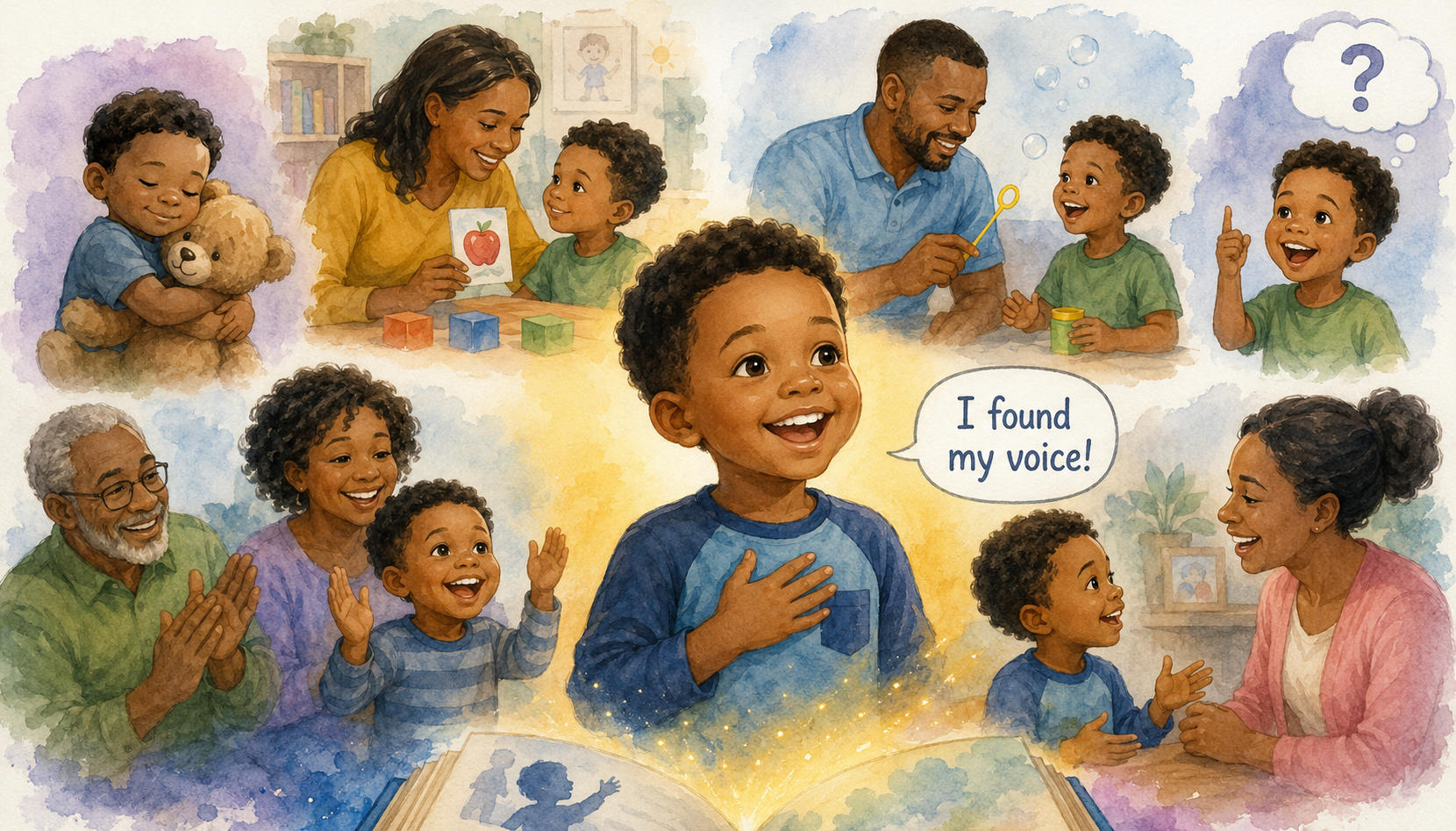
Hendrix enters the story as a joyful boy with “curious eyes and a smile that could light up a whole room.” A wide circle of family members deeply loves him: his MiMi (grandmother), Mommy, Grandpa, and Aunts “Tee Tee” and “La La.” They read stories with him, play with him, and fill his days with laughter and warmth.
This loving environment is central to Hendrix’s story. Research confirms that just 20 minutes of quality time between a caregiver and child can positively impact child development. Hendrix’s family doesn’t just love him—they create the conditions for him to grow. This is a key lesson for families reading children’s books about growing up.
2. Growing in His Own Time
When other babies began to babble and coo, Hendrix smiled, hugged, and gave kisses. But he didn’t make sounds.
His family began to wonder. Could something be wrong? His MiMi’s heart filled with questions, but her love for him never changed. “She believed something wonderful was growing inside her precious angel.” This moment of concern, paired with unwavering hope, is so relatable for families navigating their own child’s development journey.
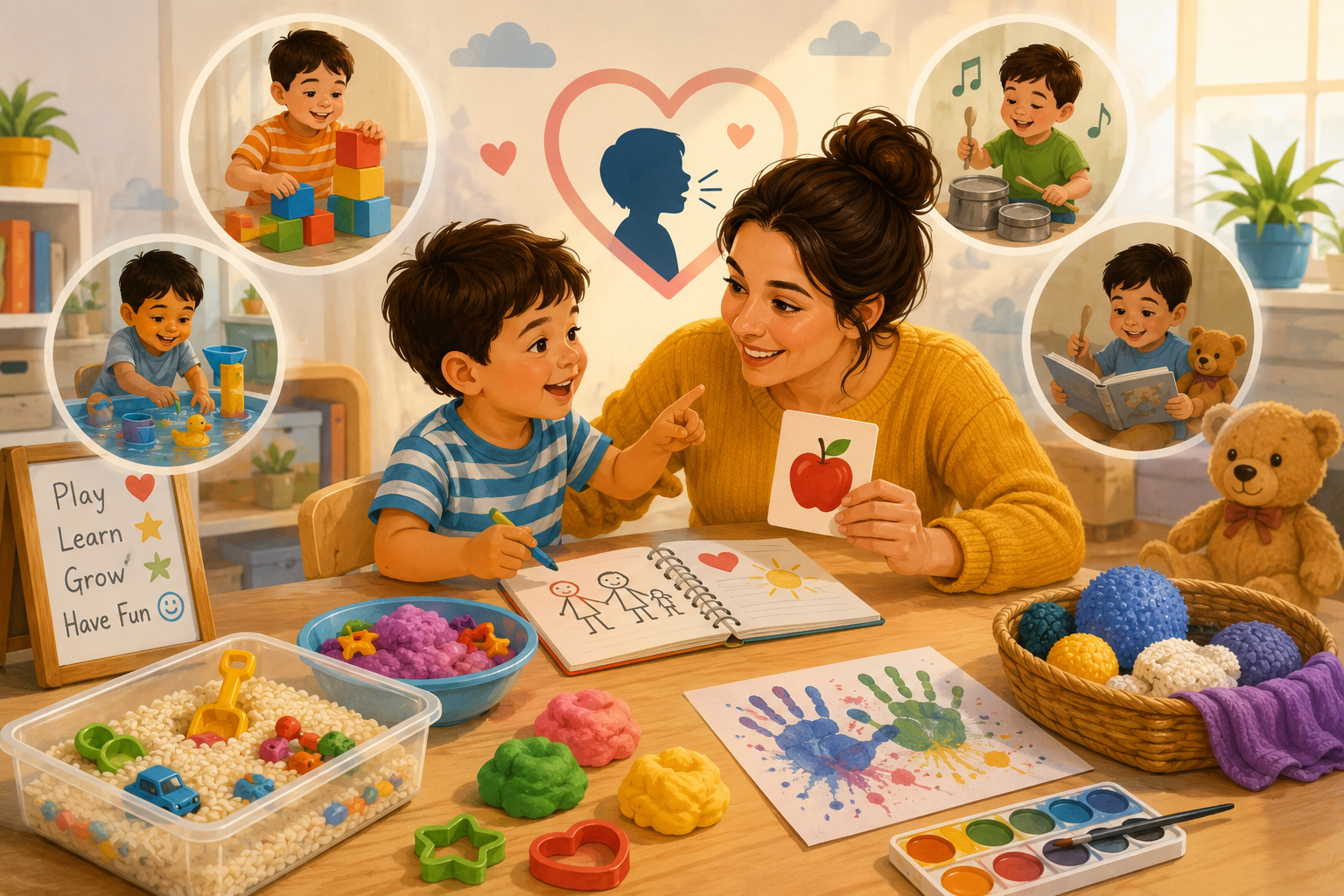
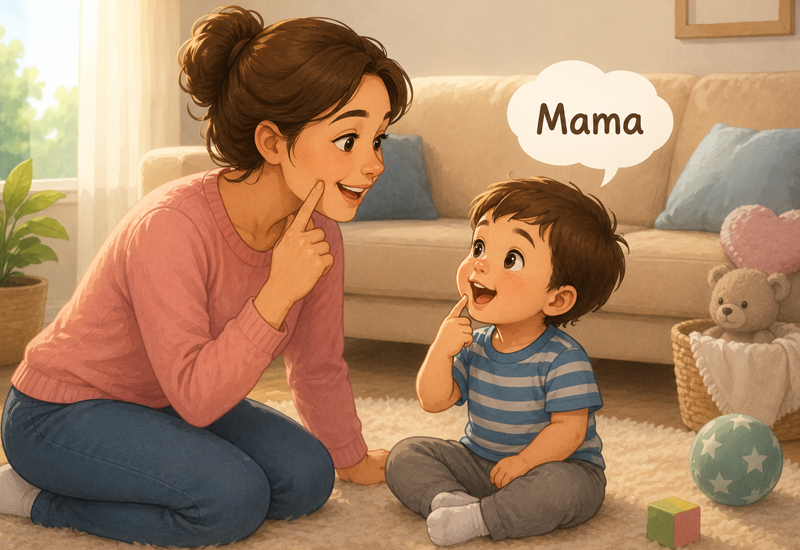
Hendrix visited doctors and began working with therapists at home. They practiced sounds together and played learning games. Progress felt slow at times, but love and patience carried them through. This part of Hendrix’s story mirrors experiences shared by many families. It demonstrates that progress isn’t always quick and that books about children growing and learning are especially valuable during these slower seasons.
3. Seeing the Child Beyond One Developmental Challenge
What makes Hendrix’s story so powerful is that we see all of him. His speech delay is part of his journey, but it doesn’t define him. He is still the boy with the radiant smile, still surrounded by people who love him, and still full of promise. His family sees the whole child, not just the challenge.
This is an important message woven throughout the best children’s books about developmental milestones: a child’s personality and worth are far bigger than any single challenge they face.
For a full analysis of how Hendrix finds his voice and how your child can grow from this story, analyze our blog “Children’s Book About Finding Your Voice: From Words to Confidence.”
Understanding Individual Paths in Childhood Development
The world often pushes children toward standardized milestones. Yet developmental science shows that children follow individual paths. Hendrix’s journey illustrates this beautifully.
1. Development Does Not Look the Same for Every Child
Some children begin talking early. Others—like Hendrix—take more time. Both paths are perfectly normal.
This is why stories about a child’s growth matter so much. They remind caregivers that children don’t march in lockstep. A child who isn’t talking at the same age as peers isn’t “behind”—they’re simply on their own timeline.
2. Why Comparing Children Can Be Difficult
It’s natural to compare. Parents at playdates notice who is speaking and who isn’t. But comparisons can create unnecessary worry.
Books that normalize different developmental paths help break this cycle. They shift the focus from “How does my child compare?” to “How is my child growing?” This is one of the greatest gifts of children’s books about child development: they help families see progress rather than deficits.
3. Recognizing a Child’s Own Progress
Hendrix’s family celebrated every new sound and word. They didn’t wait for him to “catch up” to other children before rejoicing in his steps forward. This kind of recognition—honoring a child’s personal progress rather than comparing them to others—is central to healthy development.
When families read books about childhood development together, they learn to see their own child’s journey through a more compassionate lens.
For more, read our blog “Activities for Child Development: Helping Children Learn, Talk, and Grow.”
How Family Support Shapes a Child’s Growing Confidence
Hendrix would not have found his voice without the unwavering support of his family. The book demonstrates how a strong support system builds a child’s confidence to keep trying, even when things are hard.
1. Creating a Loving Environment
Hendrix’s MiMi reads with him, laughs with him, and sings softly to him: “You are my sunshine, my only sunshine.” His Mommy cheers for every little sound he makes, making him feel brave enough to keep trying. His Grandpa reminds him he is strong, smart, and full of “wonderful possibilities.”
This constant, steady presence communicates to Hendrix that he is loved exactly as he is. He doesn’t have to earn their love by speaking. He already has it. This security is the foundation upon which his confidence grows.
2. Encouraging Progress Without Pressure
Notice what Hendrix’s family doesn’t do: they don’t push him or pressure him. They create opportunities for growth and celebrate his efforts, but they don’t demand that he perform.
This balance is key for families supporting a child through a developmental challenge. Encouragement, not pressure, is what helps a child feel safe enough to try.
3. Being Present Through Different Stages
Hendrix’s family shows up for him at every stage. When speech was difficult, they sought help. When progress was slow, they remained patient. When the breakthrough came, they celebrated.
This kind of presence demonstrates that caregiving isn’t just about solving problems—it’s about walking alongside a child through every step of their journey. It’s the thread that ties together so many meaningful child development stories for families.
From Early Development to Meaningful Milestones
Milestones matter. But so does the small, everyday growth that happens between them.
1. Noticing Small Changes
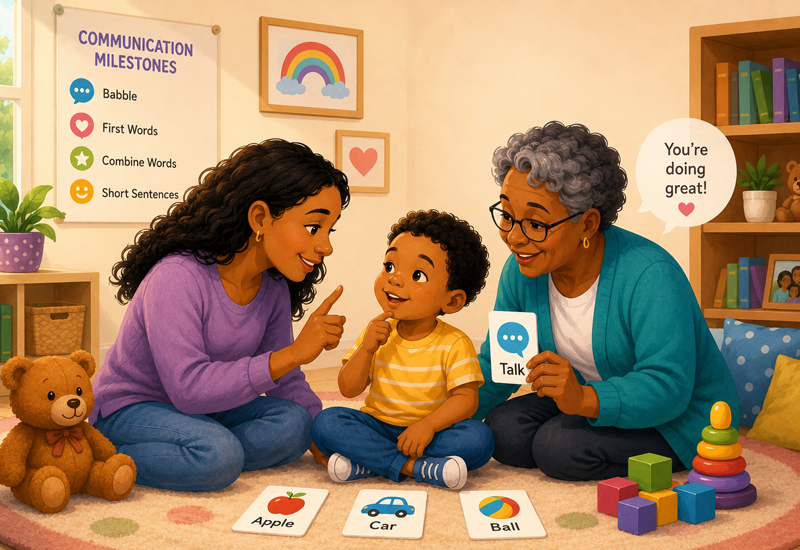
After months of practice, something began to happen. First came two words. Then three words. Then four-word sentences. Each step, however small, was a milestone worth celebrating.
2. Celebrating Progress Along the Way
When Hendrix turned five, something amazing happened: he began speaking in complete sentences. He started asking questions, sharing thoughts, and telling everyone what he needed.
His family had every reason to celebrate. But they didn’t wait until that moment to rejoice. They celebrated each step along the way. This is a practical takeaway for families reading children’s books: find joy in every stage of progress, not just the big moments.
3. Understanding That Progress Can Be Gradual
Sometimes progress feels frustratingly slow. Hendrix’s therapy sessions didn’t produce overnight results. But his family kept showing up, kept practicing, and kept believing.
This is the reality of development for many children. The journey isn’t linear. There are plateaus and leaps, good days and hard ones. Books that reflect this truth help families hold onto hope during slower seasons.
What Hendrix’s Story Shows About Growing and Learning
Hendrix’s story offers a model for how children grow: step by step, with love and patience, they become who they are meant to be.
1. Progress Can Happen Step by Step
Hendrix didn’t wake up one morning suddenly speaking in paragraphs. He started with sounds, then words, then short sentences, then complete ones. Each step was built on the previous one.
2. Confidence Can Grow with New Abilities
As Hendrix’s language grew, so did his confidence. The boy who had been non-verbal for so long now loves to talk and share his ideas. Learning new skills didn’t just expand what he could do—it changed how he saw himself.
3. A Child’s Personality Remains Bigger Than One Challenge
Hendrix’s personality never changed. He was always the happy boy with curious eyes and a smile that lit up the room. His speech delay was a challenge, but it wasn’t his identity. By the end of the book, he has all the wonderful qualities he always had—plus a new voice to go with them.
This is a powerful message for any child working through a developmental challenge: you are so much more than the thing you’re working on.
Why Child Development Stories Can Give Families Perspective
Reading children’s books about child development together offers more than entertainment. It opens up conversations and shifts perspectives in meaningful ways.
1. Creating Conversations Around Growth
When families read these stories together, they naturally talk about the characters’ experiences. This opens doors to discussing a child’s own development in a low-pressure way. “Hendrix had trouble talking, just like you did, remember? And look how far you’ve come.”
2. Showing Children That Every Journey Is Different
These stories normalize differences. They tell children: not everyone learns to speak at the same time, and that’s okay. Not everyone walks at the same age, and that’s okay. You are exactly where you need to be.
3. Celebrating Growth Rather Than Comparison
Instead of asking “How do we measure up?” these stories encourage families to ask “What progress are we celebrating?” This small shift in focus—from comparison to celebration—can change everything about how a family experiences child development.
For Educators and Therapists – Using Books as Tools
The value of books about children growing and learning extends beyond families. They are powerful tools in educational and therapeutic settings.
1. In the Classroom – Building Empathy and Understanding
Teachers can use stories like Hendrix Finds His Voice to build empathy in their classrooms. When children learn about a character who developed differently from them, they develop compassion for classmates who may be on their own unique paths.
These books also give children language to talk about differences. They learn that some kids have speech therapists, or wear glasses, or need extra help with reading—and that none of these things make someone less valuable.
2. In Speech Therapy – Books as Practice Tools
For speech-language pathologists, stories like Hendrix’s offer a way to talk about therapy in terms children can understand. Hendrix went to therapy, and it helped him. Children in speech therapy can see themselves in their experience.
The book’s repetition and simple language make it a useful practice tool for beginning readers as well. The note to parents at the end of the book offers practical suggestions that therapists can share with families.
3. For Counselors – Addressing Developmental Anxiety
Children who are working through developmental challenges often experience anxiety. They may worry that they’re “behind” or “different.” Counselors can use stories about a child’s growth to explore these feelings gently.
These stories normalize the experience of being different. They show children that challenges don’t have to be sources of shame—they can be part of a journey that leads to growth.
Conclusion
Hendrix Finds His Voice by Dr. Kathy L. McMillan-Bennon ends with a powerful image. Hendrix is growing into a big boy. He still has curious eyes and a smile that lights up the room. “But now he has something else. A Voice. And Hendrix is not afraid to use it.”
This final line captures what every caregiver wants for their child: not just skills, but the confidence to use them. Not just growth, but the knowledge that they are valued exactly as they are.
Whether you’re a parent, grandparent, educator, or therapist, children’s books about child development offer a way to share this message with the children in your life. They remind us that growth takes time, that patience matters, and that a child’s voice—when it’s ready to be found—is something beautiful to celebrate.
Frequently Asked Questions
What topics do children’s development books typically cover?
These books often cover speech and language development, motor skills, social-emotional growth, cognitive milestones, and the emotional experiences of children who develop differently from their peers.
Can these books be used in a classroom setting?
Absolutely. Teachers can use these stories to build empathy and understanding among students.
Can reading these books reduce anxiety for parents?
Yes. Many parents experience anxiety when their child doesn’t meet milestones at expected times. These books reassure them that developmental paths vary widely and that love, patience, and support make all the difference.