Every child deserves to feel heard, seen, and understood. But for some children, finding the courage to speak up and express themselves doesn’t come naturally. Whether a child faces speech delays, shyness, or simply needs extra encouragement, the journey toward confident communication is deeply personal and profoundly important. A children’s book about finding your voice can serve as a powerful tool in this journey, showing young readers that their words matter and that they have something valuable to share with the world.
One such book that beautifully captures this journey is Hendrix Finds His Voice by Dr. Kathy L. McMillan-Bennon. This heartfelt story, inspired by the author’s real-life grandson, follows a young boy who discovers the power of his own voice with patience, love, and unwavering family support. It stands as a shining example of children’s books about self-expression that both entertain and educate.
What It Means for a Child to Find Their Voice
Finding one’s voice is about so much more than learning to speak. For a child, it represents the moment they realize their thoughts, feelings, and ideas are worthy of being expressed. A children’s book about finding your voice helps children understand that communication is not just about words—it’s about connection, identity, and belonging. When a child finds their voice, they discover:
- The confidence to share what’s on their mind
- The ability to ask for what they need
- The joy of connecting with others through words
- The freedom to let their personality shine
Hendrix Finds His Voice illustrates this beautifully as Hendrix transitions from a quiet observer to an active participant in his world. His story is a testament to the idea that every child’s timeline is unique and that books about finding your voice for children can provide reassurance during this journey.
The Journey from Words to Confidence
Confidence doesn’t appear overnight. It builds slowly, word by word, moment by moment. A meaningful children’s book shows this progression in a way that children can understand and relate to.
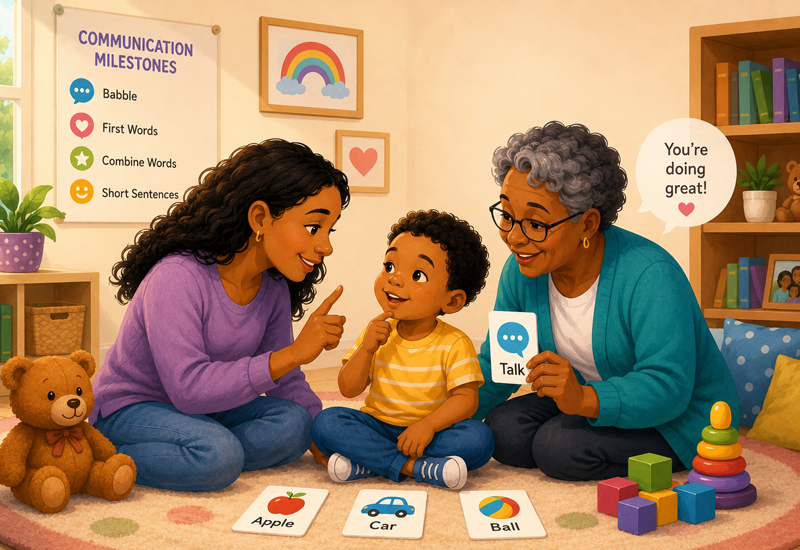
In this book, readers witness Hendrix’s gradual transformation. At first, he communicates through hugs, smiles, and affectionate gestures. His family treasures these expressions, but they also notice that he isn’t babbling or cooing like other babies. Rather than rushing him, they choose patience and seek the support he needs. The journey from words to confidence includes:
- Recognizing the need for help: Hendrix’s family consults doctors and therapists
- Accepting support: Hendrix works with speech therapists who make learning fun
- Practicing consistently: Daily practice with sounds, games, and encouragement
- Celebrating small victories: Each new word is a cause for celebration
- Building momentum: Words become sentences, and sentences become conversations
This progression mirrors what happens when children discover stories about children expressing themselves—they see a reflection of their own potential.
Hendrix’s Journey Beyond His First Words
1. Moving into Complete Sentences
When a child forms complete sentences, it marks a shift to genuine communication. Hendrix’s breakthrough comes gradually—two words, then three, then four-word sentences. Each step builds his confidence. This resonates with parents, reminding them that slow progress is still progress, and shows children that learning to speak is a journey worth taking.
2. Beginning to Ask Questions
Asking questions signals active engagement with the world. When Hendrix asks questions, he’s not just repeating words but seeking understanding. Questions like “Why?” open doors to deeper connections, satisfying natural curiosity. This development shows a child moving from passive recipient to active participant in conversations with those around them.
3. Sharing What Is on His Mind
The most significant milestone comes when Hendrix starts sharing his thoughts freely—telling his family what he needs, feels, and thinks. This is where communication transforms into true self-expression. This stage helps children understand that their thoughts are valuable, encouraging them to speak up about their own experiences, ideas, and emotions with confidence.
For full analysis, read our blog “Children’s Books About Child Development: A Story of Growth, Patience, and Progress.”
When Children Begin Expressing Their Own Thoughts
1. Finding Words for Ideas
Finding words for ideas is an exciting milestone in a child’s communication journey. This is where a children’s book about finding your voice, like Hendrix Finds His Voice, becomes powerful—showing children that their thoughts can be translated into words others understand. Each successful expression reinforces confidence and encourages more sharing.
2. Sharing Thoughts with Loved Ones
Communication is relational. When children share thoughts with loved ones, they deepen bonds and strengthen support networks. Hendrix Finds His Voice emphasizes the family’s role—MiMi, Mommy, Grandpa, and aunts create a safe space for growth. Children thrive when they feel secure, and family encouragement makes all the difference.
3. Letting Personality Come Through Communication
Once a child finds their voice, their unique personality emerges—humor, creativity, and individuality shine through. Hendrix’s curious eyes and bright smile are now accompanied by words revealing his thoughts and dreams. Books that encourage self-expression help children understand that their voice is an extension of who they truly are.
Learning to Express Needs and Feelings
1. Telling Others What He Needs
Communicating needs is a practical benefit of finding one’s voice. A child who can say “I’m hungry” or “I need help” navigates daily life better. Hendrix Finds His Voice shows Hendrix moving from gestures to verbal expression. This makes it an excellent children’s book for teaching self-advocacy.
2. Communicating More Freely
As Hendrix becomes more comfortable speaking, he communicates freely—without holding back or fearing mistakes. He engages in conversations, shares stories, and participates fully in family life. This freedom is the hallmark of children’s books about communication confidence: the ability to speak without fear and express oneself openly.
3. Building Connection Through Expression
Communication builds bridges between people. Through expression, children connect with family, friends, and the wider world. In Hendrix Finds His Voice, these connections grow stronger as Hendrix becomes more verbal, deepening his relationships. This reminds us that stories about children expressing themselves are ultimately about love and belonging.
How Communication Can Strengthen Confidence
1. Becoming More Comfortable Speaking
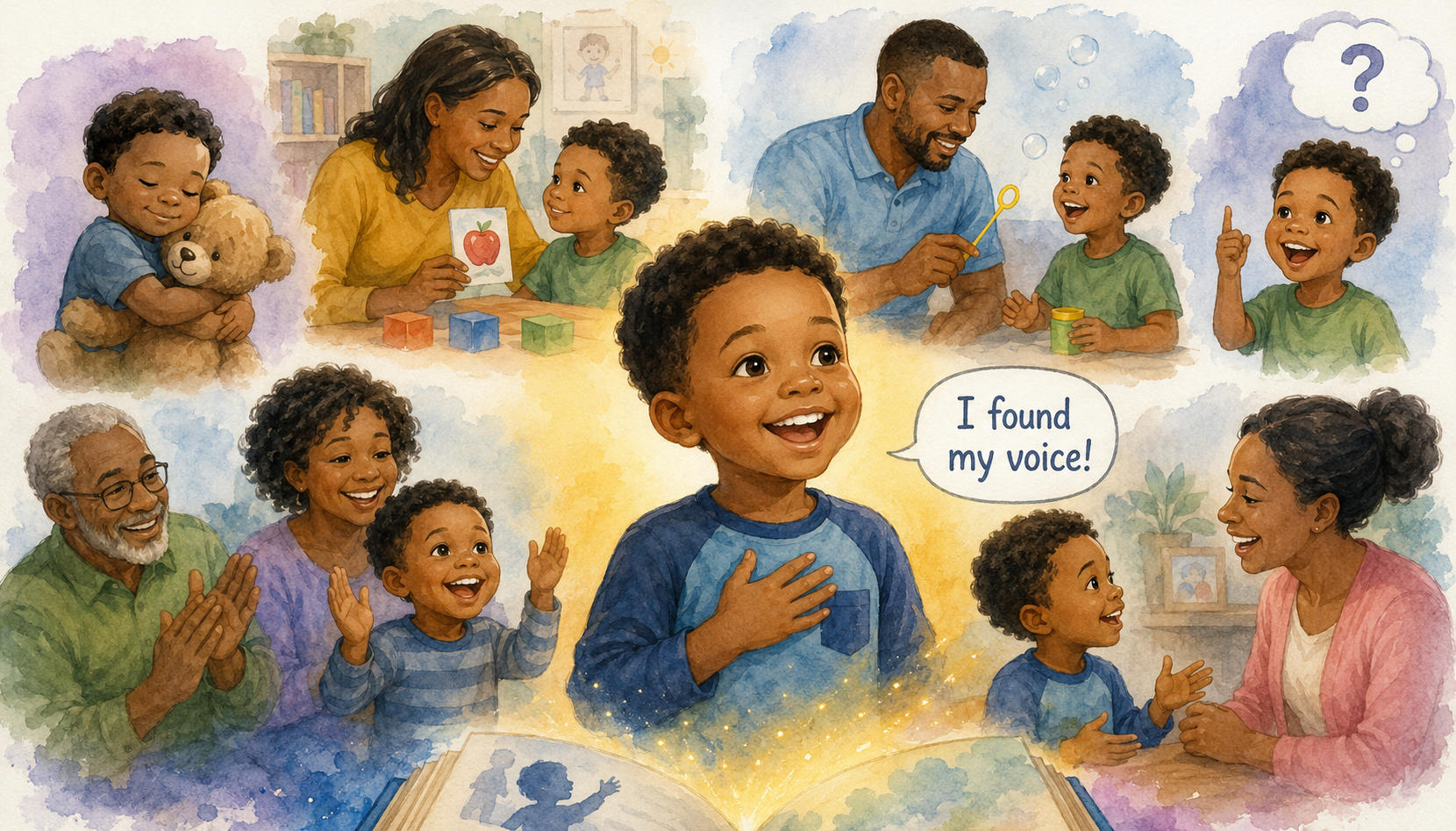
Each successful communication builds a child’s comfort level. Hendrix’s family claps and cheers for every sound, creating positive feedback that strengthens his confidence. A children’s book about finding your voice that shows this process helps children understand that practice and encouragement lead to real improvement over time.
2. Sharing Ideas Without Fear
Many children fear being judged, but when they learn their ideas are welcome, they become willing to share. Hendrix reaches a point where he is not afraid to use his voice—knowing his family will listen. This message is central to books about finding your voice for children: ideas are important and worthy of expression.
3. Allowing a Child’s Personality to Shine
When a child feels safe expressing themselves, their authentic personality emerges. Hendrix’s voice is described as “strong,” and he loves to share his big ideas. This is the ultimate goal—the ability to be fully oneself. Children’s books about speaking up show that sharing unique perspectives is powerful and valuable.
From Finding Words to Finding His Voice
1. The Moment His Progress Becomes Something Bigger
For Hendrix, the moment he starts speaking in complete sentences is the turning point. His progress becomes something bigger than just learning to talk—it becomes a source of identity and confidence.
2. From Communication to Self-Expression
At first, communication is about meeting basic needs. But as Hendrix grows, communication becomes self-expression. He shares his thoughts, asks questions, and lets his personality shine through. This is the transition that makes Hendrix Finds His Voice such a compelling children’s book about finding your voice.
3. “I Found My Voice”
The most triumphant moment comes when Hendrix declares, “I found my voice!” This simple statement encapsulates everything he has been through—the therapy, the practice, the patience, and finally, the breakthrough. It’s a celebration of his unique journey and a powerful affirmation.
Why Stories About Self-Expression Matter
1. Giving Children Positive Representation
Books like Hendrix Finds His Voice provide representation for children who may be struggling with speech or communication challenges. Seeing a character like themselves succeed gives them hope and encouragement. It’s one of the many reasons why children’s books about self-expression are so important.
2. Encouraging Children to Express Themselves
When children read about characters who find their voice, they are encouraged to find their own. The book inspires readers to speak up, share their thoughts, and believe in the value of their words.
3. Celebrating Individual Growth
Every child grows at their own pace, and Hendrix Finds His Voice celebrates this truth. It reassures parents and children alike that there is no “right” timeline for development—only the right support and love to help each child thrive.
For more learning about activities that are beneficial for child growth, see our blog “Activities for Child Development: Helping Children Learn, Talk, and Grow.”
Conclusion
Hendrix Finds His Voice by Dr. Kathy L. McMillan-Bennon is more than just a children’s book about finding your voice—it is a celebration of family, patience, and the unique journey every child takes toward self-expression. Through Hendrix’s story, readers learn that finding their voice is possible with love, support, and perseverance. This children’s book teaches us that every child develops at their own pace, that family support makes all the difference, and that small victories lead to great achievements. It reminds us that every voice matters and that the world is listening. For parents, educators, and caregivers looking for children’s books about self-expression, Hendrix Finds His Voice is a powerful and touching choice. It reminds us that helping a child find their voice is one of the greatest gifts we can give, and that the journey is just as meaningful as the destination.
Frequently Asked Questions
Why are these books important for children?
They provide positive representation, normalize communication challenges, and encourage children to speak up. These books can inspire young readers to believe their words matter and deserve to be heard.
What age group benefits most from these stories?
Children ages 3 to 8 benefit most. These books work well as read-alouds for younger children and as independent reading for early elementary students learning about self-expression and confidence.
What themes do these books typically explore?
Common themes include patience, family support, perseverance, overcoming fear, and celebrating individual growth. They also explore building communication confidence and learning to express needs and feelings.