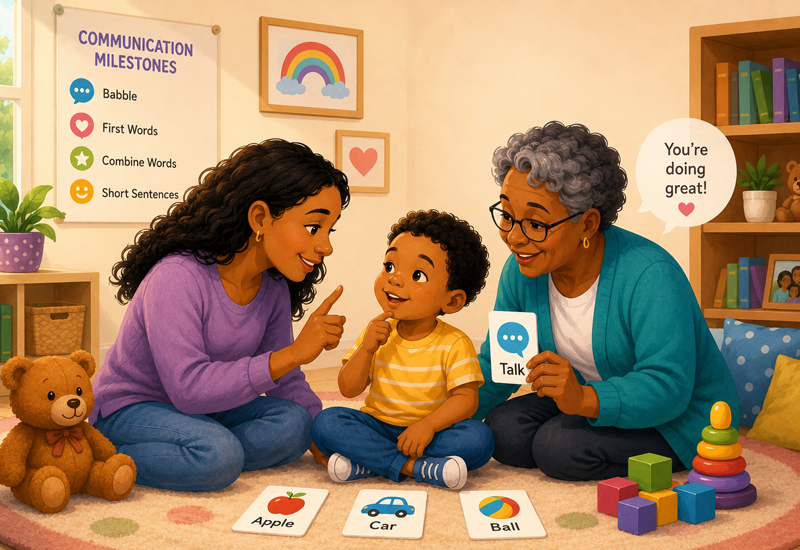
Every child’s journey of growth and discovery is a unique adventure. For some, like Hendrix in the heartwarming book Hendrix Finds His Voice by Dr. Kathy L. McMillan-Bennon, finding that voice takes a little more time, patience, and support from a loving family. This story beautifully illustrates how the right activities for child development can make a world of difference.
Whether you’re a parent, grandparent, or caregiver, incorporating purposeful play into your daily routine is one of the most powerful things you can do. It’s through these moments of connection that children learn to talk, grow, and build the confidence they need to thrive.
Why Activities Matter for Child Development
Activities for child development are not just about keeping little hands busy. They are the building blocks for lifelong learning. Play is how children explore the world, make sense of their experiences, and develop crucial skills. Research shows that through back-and-forth interactions during play—sometimes called “serve and return”—children build the neural pathways necessary for communication and social skills.
The story of Hendrix is a perfect example. While he wasn’t speaking at the same time as other children, his family never stopped engaging with him. They read stories, sang songs, and played games. These foundational activities helped him build the confidence and skills he needed before he could speak in complete sentences. Dr. Kathy L. McMillan-Bennon’s book serves as a beautiful reminder that every child’s timeline is different, and that a supportive, playful environment is the key to unlocking their potential.
How to Make Activities Part of Your Daily Routine
You don’t need a special playroom or expensive toys to support your child’s development. The best child development activities often happen during everyday moments. As one expert notes, “children learn language best from the people around them talking about the things that are happening to them.” Morning time offers a perfect opportunity to sing a silly song while getting dressed, and you can let your child pick out a toy to carry to the breakfast table. During mealtimes, talk about the food you are eating, discussing its color and temperature, and let them help “serve” a stuffed animal.
Bath time becomes a fantastic sensory activity that encourages language when you pour water into cups of different sizes, sing songs, and talk about the bubbles. Car rides provide a great time for conversation and building listening skills through games like “I Spy” or singing along to the radio. Finally, make reading a special part of your nightly routine, allowing your child to turn the pages and point to pictures, as the repetition of a favorite story is incredibly powerful for learning.
How to Adapt Activities for Children with Special Needs
Every child deserves to participate in educational activities for children. The goal is inclusion, which sometimes requires a little creativity. For children with special needs, it’s important to follow their lead and focus on their interests to keep them engaged. As the book Hendrix Finds His Voice shows, therapy and support can be integrated into playful, loving interactions.
- Focus on Interests:If a child loves cars, use toy cars for counting, color sorting, or even creating stories together.
- Offer Choices:Instead of asking open-ended questions, offer simple choices (“Do you want the red cup or the blue cup?”). This allows them to communicate in a way that feels manageable.
- Break Down Activities:If an activity seems overwhelming, break it into smaller, simpler steps. For example, for a puzzle, start by just putting in one piece at a time.
- Use Sensory Tools:For children who are sensory avoidant, offer tools like gloves, spoons, or scoops to participate in messy play like finger painting or exploring a sensory bin.
Activities That Support Speech and Language Development
Speech and language development is about more than just words. It’s about the ability to express thoughts, share ideas, and understand others. Here are some effective child learning activities designed to foster those skills:
1. The Pause and Wait Game:
Build excitement with a “Ready, Steady…” and then pause, leaving a gap for your child to anticipate. This encourages them to make a sound, a gesture, or even say the word “Go!”.
2. Turn-Taking Activities:
Conversation is a back-and-forth exchange. Practice this by taking turns rolling a ball, pushing a button on a pop-up toy, or building a tower together. Use phrases like “My turn” and “Your turn.”
3. Singing with Actions:
Songs are powerful tools for language. Songs with actions, like “Row, Row, Row Your Boat” or “The Wheels on the Bus,” help children connect words with meaning. You can also leave pauses in familiar songs for them to fill in.
4. Interpreting Gestures:
When your child points to a glass of water, say the word “water” for them. When they put their hands up to be picked up, say “up.” You are giving them the words for their non-verbal messages.
5. The Mystery Bag:
Place a few familiar objects in a bag. Have your child reach in, feel an item, and describe it before pulling it out. This builds descriptive vocabulary and problem-solving skills.
For more learning, read our blog “Children’s Book About Finding Your Voice: From Words to Confidence.”
Tips for Parents: Making Activities Effective and Fun
The goal of any activity is to connect with your child and have fun. Here are some tips to make sure your activities for child development are both effective and joyous.
1. Follow Your Child’s Lead and Interests
Children learn best when they are engaged and motivated. If they’re fascinated by trains, incorporate trains into your counting, storytelling, and building activities.
2. Keep Activities Short and Age-Appropriate
A child’s attention span is short. A five-minute, focused activity can be more beneficial than a 30-minute, frustrating one. Always be mindful of their developmental stage.
3. Praise Effort, Not Just Results
Celebrating the attempt is crucial for building confidence. Acknowledge their hard work, not just the correct answer. This approach mirrors the unconditional love and support that helped Hendrix find his voice.
4. Repeat Activities to Build Confidence
Repetition is the key to learning. It helps solidify new skills and builds confidence. If a child loves a particular game or story, play it over and over. They will learn more each time.
5. Be Present: Put Away Distractions
Turn off the TV, put away your phone, and give your child your full attention. These moments of focused, one-on-one interaction are gold for their development.
Activities Inspired by Hendrix Finds His Voice
The story of Hendrix offers wonderful opportunities for child development and learning activities. Here are a few ideas to bring the book to life:
- Creating a “Voice Journal” with Your Child:Like Hendrix, children can use pictures and words to document their progress. Start a simple notebook and help them draw pictures of their favorite things or things they want to say.
- Acting Out Hendrix’s Story:Use toys to act out the story. Show Hendrix being happy, going to the doctor, and working with his therapists. This is a great way to process the experience and build empathy.
- Drawing Pictures of Family Support Systems:Have your child draw their family and the people who love them, just like Hendrix’s MiMi, Mommy, Grandpa, Tee Tee, and La La. This builds a sense of security and belonging.
- Practicing Words Like Hendrix Did:Use flashcards or objects around the house to practice naming things, just as Hendrix did in his therapy sessions. Start with single words and build to two-word phrases.
- Making a “My Voice” Collage:Gather magazines and have your child cut out pictures of people talking, laughing, singing, or expressing themselves. Glue them onto a board and label it “My Voice.” This visual representation of communication is a powerful symbol of self-expression.
For more analysis, explore our blog “Children’s Books About Child Development: A Story of Growth, Patience, and Progress.”
Sensory Activities That Support Overall Development
Sensory play is a cornerstone of early childhood development. It stimulates brain development, builds fine and gross motor skills, and supports language development. Here are some classic sensory activities:
1. Sensory Bins with Rice, Sand, or Water
These bins are incredibly versatile. Hide small toys in a bin of rice and have your child find them. Use cups, funnels, and scoops to encourage pouring and measuring. This type of play supports fine motor development and vocabulary building.
2. Playdough with Textured Tools
Squishing, rolling, and molding playdough strengthens the muscles in the hands needed for writing. Add textured tools like plastic forks, rolling pins, or cookie cutters to extend the play.
3. Finger Painting and Messy Play
While it might seem daunting, messy play is fantastic for sensory exploration. You can use shaving cream, pudding, or non-toxic paints. Focus on the experience rather than the final product.
4. Listening to Different Sounds and Music
Auditory play is vital for speech development. Bang on pots and pans, shake homemade instruments, or listen to a variety of music genres. This helps children learn to discriminate between different sounds.
5. Exploring Different Textures and Fabrics
Create a “texture box” filled with items like cotton balls, sandpaper, faux fur, and silk scarves. Have your child describe how each item feels (soft, rough, smooth). This builds vocabulary and fine motor skills.
Conclusion
Ultimately, helping a child find their voice is about more than just teaching them words. It’s about creating a world filled with love, patience, and opportunities for playful learning. Dr. Kathy L. McMillan-Bennon’s book, Hendrix Finds His Voice, beautifully illustrates that with the right support and engaging activities for child development, every child can grow, learn, and share their unique voice with the world. Trust your instincts, celebrate every small victory, and remember that you are your child’s first and most important teacher.
Frequently Asked Questions
What should I do if my child becomes frustrated during activities?
If your child seems frustrated, take a break and try again later. Keep activities short and match them to your child’s developmental level.
Where can I find more child development activities and resources?
Simple activities are all around you in daily routines. Your pediatrician, speech-language pathologist, or early intervention specialist can provide additional ideas. Libraries, parenting websites, and early childhood education programs also offer wonderful resources.
How can I make activities part of my daily routine without extra time?
You don’t need special equipment or extra time! Morning routines, mealtimes, bath time, car rides, and bedtime all offer natural opportunities for child development.